What Is Mushroom Coffee? Benefits, Side Effects & How It Works (2026 Guide)
Discover what mushroom coffee really is, how it works, the science-backed benefits, potential side effects, and whether it's right for you. Complete beginner's guide.
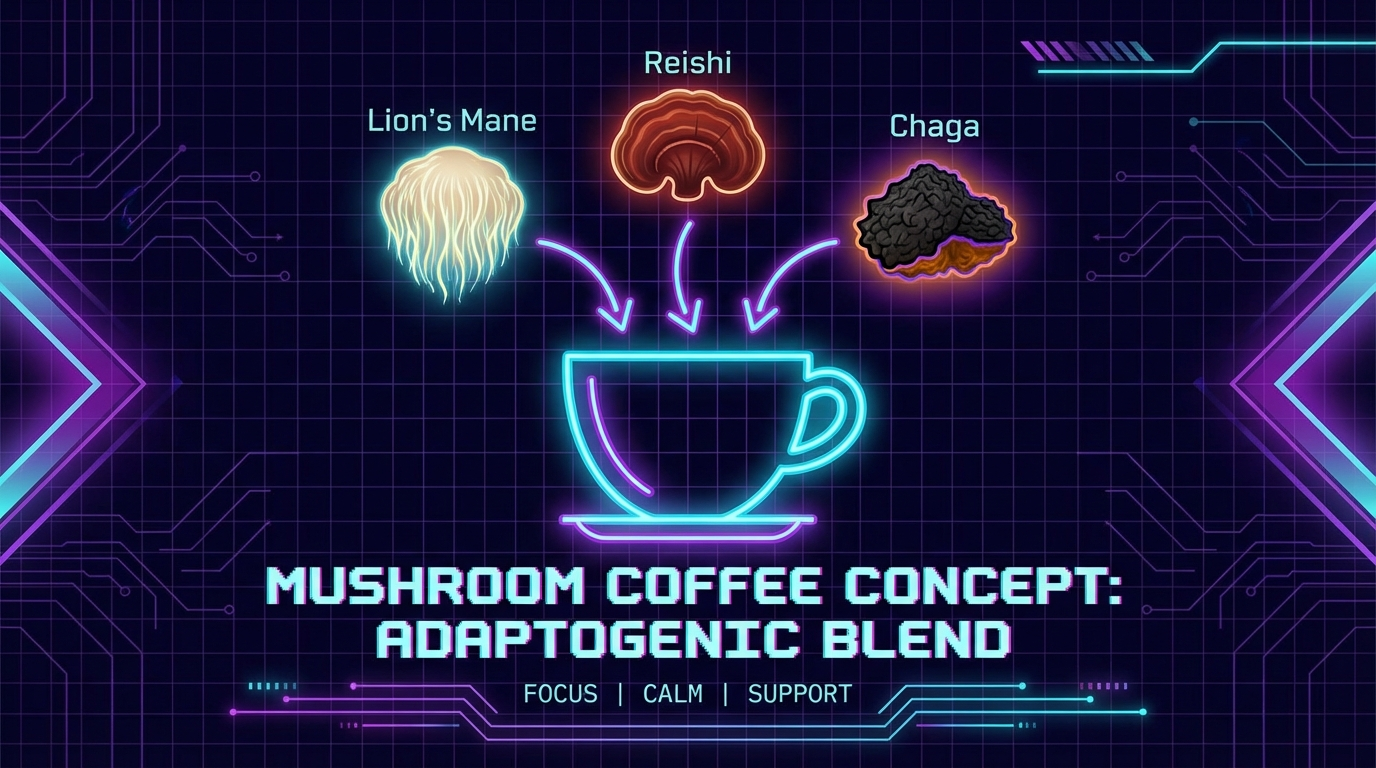
What Is Mushroom Coffee? Benefits, Side Effects & How It Works
Mushroom coffee has exploded from a niche wellness trend to a mainstream coffee alternative. But what exactly is it? Is it just coffee with mushrooms floating in it? Does it taste like fungi? And perhaps most importantly—does it actually work?
In this comprehensive guide, we'll break down everything you need to know about mushroom coffee: what it is, how it's made, the science behind functional mushrooms, potential benefits and side effects, and whether it's worth making the switch from your regular morning brew.
What Exactly Is Mushroom Coffee?
Mushroom coffee is a blend of regular coffee (or coffee alternatives) with extracts from functional mushrooms. Despite the name, it doesn't contain the culinary mushrooms you'd find in your pasta—portobellos, button mushrooms, or shiitakes from the grocery store.
Instead, mushroom coffee uses medicinal or functional mushrooms—specific varieties that have been used in traditional medicine for thousands of years, particularly in Traditional Chinese Medicine and Ayurvedic practices.
How Is Mushroom Coffee Made?
The production process is more sophisticated than simply grinding mushrooms into coffee beans:
1. Mushroom Cultivation
- ▸Functional mushrooms are grown on organic substrates (typically wood, grain, or compost)
- ▸Grown to full maturity to maximize beneficial compound development
- ▸Harvested at peak potency
2. Extraction Process This is the critical step that determines quality:
- ▸Hot Water Extraction: Pulls out water-soluble compounds like beta-glucans
- ▸Alcohol Extraction: Captures alcohol-soluble compounds like triterpenes
- ▸Dual Extraction: Uses both methods for maximum bioactive compound preservation
- ▸Spray Drying: Converts liquid extract into powder form
3. Blending
- ▸Mushroom extract powder is blended with coffee (instant, ground, or whole bean)
- ▸Ratios vary by brand—some are coffee-forward, others mushroom-forward
- ▸Additional ingredients like adaptogens, prebiotics, or flavorings may be added
4. Quality Markers High-quality mushroom coffee uses:
- ▸Fruiting bodies (the actual mushroom) not just mycelium (root structure)
- ▸Dual extraction for full spectrum benefits
- ▸Third-party testing for purity and potency
- ▸Organic certification where possible
The Key Difference: Functional vs. Culinary Mushrooms
| Feature | Functional Mushrooms | Culinary Mushrooms | |---------|---------------------|-------------------| | Primary Use | Health benefits, adaptogens | Flavor, nutrition | | Common Types | Lion's Mane, Reishi, Chaga, Cordyceps | Button, Portobello, Shiitake, Oyster | | Preparation | Extracted for bioactive compounds | Cooked and eaten whole | | Taste in Coffee | Earthy, neutral, barely detectable | Would taste like mushroom soup | | Caffeine | Reduced or replaced | N/A |
The Science: How Mushroom Coffee Works in Your Body
Understanding mushroom coffee requires understanding adaptogens and beta-glucans—the compounds that make functional mushrooms special.
Adaptogens: Nature's Stress Regulators
Functional mushrooms are adaptogens—substances that help your body adapt to stress and maintain balance (homeostasis). Unlike stimulants that force your body into an aroused state, adaptogens work by:
- ▸Modulating cortisol levels: Helping regulate your stress response
- ▸Supporting adrenal function: Preventing burnout from chronic stress
- ▸Enhancing cellular energy production: More efficient ATP generation
Beta-Glucans: The Immune Activators
Beta-glucans are complex polysaccharides found in functional mushrooms:
- ▸Activate immune cells: Stimulate macrophages, natural killer cells, and T-cells
- ▸Modulate immune response: Can both stimulate AND calm immune activity as needed
- ▸Gut health support: Act as prebiotics, feeding beneficial gut bacteria
Caffeine Synergy
Here's where mushroom coffee gets interesting. The combination of lower caffeine + adaptogenic mushrooms creates a different energy profile:
Regular Coffee:
- ▸Caffeine blocks adenosine receptors → immediate alertness
- ▸High cortisol spike → energy crash 2-3 hours later
- ▸Possible anxiety, jitters, digestive irritation
Mushroom Coffee:
- ▸Lower caffeine → gentler stimulation
- ▸Adaptogens buffer cortisol response → sustained energy
- ▸Reduced adenosine rebound → no crash
- ▸Gut-friendly compounds → easier digestion
The Core Functional Mushrooms Explained
Lion's Mane (Hericium erinaceus)
The Brain Booster
Lion's Mane is the star player for cognitive enhancement. It contains two unique compounds:
- ▸Hericenones: Stimulate nerve growth factor (NGF) production
- ▸Erinacines: Cross the blood-brain barrier, promoting neurogenesis
Research-backed benefits:
- ▸Improved memory and recall (Mori et al., 2009)
- ▸Enhanced focus and mental clarity
- ▸Potential neuroprotective effects
- ▸Reduced mild cognitive impairment in older adults
Best for: Students, knowledge workers, anyone wanting mental sharpness
Reishi (Ganoderma lucidum)
The Stress Reliever
Known as the "mushroom of immortality" in traditional Chinese medicine:
- ▸Triterpenes: Anti-inflammatory, calming compounds
- ▸Polysaccharides: Immune-modulating beta-glucans
- ▸Adaptogenic properties: Helps body manage stress
Research-backed benefits:
- ▸Reduced anxiety and improved sleep quality (Chu et al., 2020)
- ▸Enhanced immune function
- ▸Anti-inflammatory effects
- ▸Potential cardiovascular benefits
Best for: High-stress individuals, poor sleepers, immune support
Chaga (Inonotus obliquus)
The Antioxidant Powerhouse
Chaga has one of the highest ORAC (antioxidant) scores of any food:
- ▸Superoxide dismutase (SOD): Potent antioxidant enzyme
- ▸Betulinic acid: Anti-inflammatory, immune-supporting
- ▸Melanin: Antioxidant that protects cellular DNA
Research-backed benefits:
- ▸Exceptional antioxidant capacity
- ▸Immune system modulation
- ▸Gut health support
- ▸Anti-inflammatory properties
Best for: General wellness, immune support, oxidative stress protection
Cordyceps (Cordyceps militaris)
The Energy Enhancer
Cordyceps has been used by athletes for centuries:
- ▸Cordycepin: Increases cellular energy production
- ▸Adenosine derivatives: Improve oxygen utilization
- ▸ATP production: Enhances cellular energy without stimulants
Research-backed benefits:
- ▸Improved exercise performance and VO2 max (Chen et al., 2010)
- ▸Enhanced oxygen utilization
- ▸Reduced fatigue
- ▸Potential anti-aging effects
Best for: Athletes, active individuals, energy without jitters
Turkey Tail (Trametes versicolor)
The Immune Supporter
One of the most researched mushrooms for immune health:
- ▸PSK (polysaccharide-K): Prescription cancer treatment in Japan
- ▸PSP (polysaccharide-peptide): Immune-modulating compound
- ▸Prebiotic fiber: Feeds beneficial gut bacteria
Research-backed benefits:
- ▸Powerful immune modulation
- ▸Gut microbiome support
- ▸Antioxidant properties
- ▸Adjunctive cancer therapy support
Best for: Immune health, gut health, overall wellness
Health Benefits of Mushroom Coffee: What the Research Says
1. Sustained Energy Without the Crash
The Claim: Mushroom coffee provides steady energy without the 2pm crash.
The Science:
- ▸Lower caffeine (30-50mg vs 95-200mg in regular coffee) reduces cortisol spikes
- ▸Adaptogenic mushrooms buffer the stress response
- ▸Cordyceps enhances ATP production for cellular energy
User Reports: Most people experience 4-6 hours of steady energy vs. 1-3 hours with regular coffee, followed by a crash.
2. Enhanced Focus and Mental Clarity
The Claim: Lion's Mane promotes cognitive function and focus.
The Science:
- ▸Lion's Mane stimulates Nerve Growth Factor (NGF) production
- ▸NGF promotes neuron growth and maintenance
- ▸Studies show improved cognitive function in mild cognitive impairment
User Reports: Many describe a "flow state" or being "in the zone" more easily, without the scattered feeling high caffeine can cause.
3. Reduced Anxiety and Jitters
The Claim: Mushroom coffee doesn't cause the anxious feeling regular coffee can.
The Science:
- ▸Reishi has anxiolytic (anti-anxiety) properties
- ▸Lower caffeine means less stimulation of the sympathetic nervous system
- ▸Adaptogens help regulate cortisol, the stress hormone
User Reports: People with caffeine sensitivity often find mushroom coffee much more tolerable.
4. Immune System Support
The Claim: Functional mushrooms boost immune function.
The Science:
- ▸Beta-glucans activate various immune cells
- ▸Mushrooms are immunomodulators—they can stimulate OR calm immune response as needed
- ▸Turkey Tail and Reishi are particularly well-researched for immune benefits
User Reports: While hard to quantify subjectively, regular users often report fewer seasonal illnesses.
5. Gut Health Benefits
The Claim: Mushroom coffee is easier on the stomach than regular coffee.
The Science:
- ▸Less acidic than regular coffee (lower chlorogenic acid)
- ▸Mushroom polysaccharides act as prebiotics
- ▸Reishi and Turkey Tail support gut microbiome balance
User Reports: Many people who experience acid reflux or stomach upset with regular coffee find relief with mushroom coffee.
6. Antioxidant Protection
The Claim: Mushroom coffee provides antioxidant benefits.
The Science:
- ▸Chaga has exceptionally high antioxidant capacity
- ▸Reishi and other mushrooms contain various antioxidant compounds
- ▸Antioxidants protect against oxidative stress and cellular damage
Note: This is a long-term wellness benefit, not something you'll feel immediately.
Potential Side Effects and Who Should Avoid It
Common Side Effects (Usually Mild)
1. Digestive Adjustment
- ▸Some people experience mild bloating or gas initially
- ▸The prebiotic fiber in mushrooms feeds gut bacteria, which can cause temporary adjustment
- ▸Usually resolves within 1-2 weeks
2. Taste Adjustment
- ▸Earthy, slightly different taste than regular coffee
- ▸Most people adapt within a few days
- ▸Adding milk, sweetener, or flavorings helps during transition
3. Lower Caffeine Effects
- ▸If you're used to high caffeine, you might initially feel less energized
- ▸Your body adjusts to the different stimulation profile
- ▸Some people add a small amount of regular coffee during transition
Who Should Avoid or Consult a Doctor First
1. Pregnant or Breastfeeding Women
- ▸Limited research on functional mushrooms during pregnancy
- ▸Lower caffeine is generally positive, but mushroom extracts haven't been thoroughly studied
- ▸Recommendation: Consult your healthcare provider
2. People with Mushroom Allergies
- ▸Obviously avoid if you have allergies to any mushroom varieties in the blend
- ▸Some people react to specific mushrooms but not others
- ▸Recommendation: Start with small amounts if unsure
3. Those on Blood Thinners or Immune-Suppressing Medications
- ▸Some mushrooms have mild blood-thinning properties
- ▸Immune-modulating effects could interact with immunosuppressants
- ▸Recommendation: Consult your doctor, especially if on prescription medications
4. Autoimmune Conditions
- ▸While many find mushroom coffee beneficial, the immune-modulating effects could theoretically affect autoimmune conditions
- ▸Recommendation: Start slowly and monitor symptoms; consult your doctor
5. Upcoming Surgery
- ▸Some functional mushrooms may have mild blood-thinning effects
- ▸Recommendation: Stop 2 weeks before scheduled surgery
Drug Interactions to Be Aware Of
- ▸Blood thinners (warfarin, etc.): Potential interaction with Reishi and Chaga
- ▸Immunosuppressants: Mushrooms modulate immune function
- ▸Diabetes medications: Some mushrooms may affect blood sugar
- ▸Blood pressure medications: Reishi may lower blood pressure
Always consult your healthcare provider if you're on prescription medications.
How Mushroom Coffee Compares to Regular Coffee
Caffeine Content Comparison
| Coffee Type | Caffeine (mg) | Effect Profile | |-------------|---------------|----------------| | Regular Coffee (8oz) | 95-200 | Strong spike, potential crash | | Mushroom Coffee | 30-50 | Gentle lift, sustained | | Decaf Mushroom Coffee | 0-5 | No stimulant effect | | Matcha | 70 | Sustained via L-theanine | | Black Tea | 47 | Moderate, steady |
Taste Profile Comparison
Regular Coffee:
- ▸Bright, acidic, bitter
- ▸Varietal differences (fruity, chocolatey, nutty)
- ▸Can be harsh on empty stomach
Mushroom Coffee:
- ▸Earthy, smooth, less acidic
- ▸Subtle cocoa or nutty undertones
- ▸Gentler on digestion
- ▸Coffee-forward or mushroom-forward depending on brand
Cost Comparison
| Option | Cost Per Serving | Notes | |--------|-----------------|-------| | Home-brewed Regular Coffee | $0.30-0.60 | Cheapest option | | Mushroom Coffee (RYZE, etc.) | $1.00-1.50 | Mid-range | | Starbucks/Dunkin | $2.50-6.00 | Most expensive | | Specialty Coffee Shop | $4.00-8.00 | Premium experience |
Mushroom coffee costs more than home-brewed regular coffee but significantly less than daily coffee shop visits.
Health Impact Comparison
| Factor | Regular Coffee | Mushroom Coffee | |--------|----------------|-----------------| | Energy | Spike and crash | Sustained, steady | | Anxiety | Can increase | Often reduces | | Digestion | Can irritate | Usually gentler | | Immune Support | Minimal | Significant | | Cognitive | Short-term boost | Potential long-term benefits | | Sleep | Can disrupt | Less likely to affect |
How to Choose Your First Mushroom Coffee
Key Factors to Consider
1. Mushroom Variety
- ▸Single mushroom (Lion's Mane only, etc.): Targeted benefits
- ▸Multi-mushroom blends: Broader benefits
- ▸Recommendation: Start with a blend for general wellness
2. Caffeine Level
- ▸High caffeine (50mg+): For those wanting strong energy
- ▸Medium caffeine (30-50mg): Balanced approach
- ▸Low/No caffeine: Evening use or caffeine-sensitive
3. Form Factor
- ▸Instant powder: Most convenient, just add water
- ▸Ground blend: Requires brewing, more traditional coffee experience
- ▸Pods/K-cups: Convenience for single-serve machines
4. Quality Indicators
- ▸✅ Fruiting body extracts (not just mycelium)
- ▸✅ Dual extraction process mentioned
- ▸✅ Third-party testing
- ▸✅ Organic certification
- ▸✅ Clear labeling of mushroom amounts
Recommended Starting Approach
Week 1-2: Transition Period
- ▸Replace one regular coffee with mushroom coffee
- ▸Drink your regular coffee for the second cup
- ▸Note how you feel—energy, focus, digestion
Week 3-4: Adjustment
- ▸Replace two regular coffees if feeling good
- ▸Experiment with preparation (black, with milk, iced)
- ▸Pay attention to sleep quality and afternoon energy
Week 5+: Full Integration
- ▸Most people settle on 50-100% mushroom coffee
- ▸Some maintain one regular coffee for caffeine needs
- ▸Find your personal optimal routine
Frequently Asked Questions
Does mushroom coffee taste like mushrooms?
No. Quality mushroom coffee tastes like smooth, earthy coffee—not like eating mushrooms. The functional mushrooms used have neutral, earthy flavors that blend with coffee rather than overpowering it. Think of it as a medium-roast coffee with subtle cocoa or nutty undertones.
How long until I feel the benefits?
Immediate (30-60 minutes): Energy and focus from caffeine + initial adaptogenic effects Short-term (1-2 weeks): Better digestion, reduced jitters, improved sleep Long-term (4-8 weeks): Immune benefits, cognitive enhancement, sustained energy patterns
Can I drink mushroom coffee every day?
Yes. Functional mushrooms are generally recognized as safe for daily consumption. In fact, consistency is key for adaptogenic benefits—they work better when taken regularly over time.
Is mushroom coffee safe for everyone?
Mostly yes, with caveats:
- ▸Pregnant/breastfeeding: Consult doctor
- ▸On medications: Check for interactions
- ▸Mushroom allergies: Avoid
- ▸Autoimmune conditions: Monitor carefully
Will mushroom coffee make me fail a drug test?
No. Functional mushrooms (Lion's Mane, Reishi, Chaga, Cordyceps) are completely legal and contain no psychoactive compounds. They are not magic mushrooms (psilocybin).
Can I mix mushroom coffee with regular coffee?
Absolutely. Many people do this during transition or to customize their caffeine intake. Start with a 50/50 blend and adjust to taste.
What's the best time to drink mushroom coffee?
Morning or early afternoon for most people. While lower in caffeine, it still contains enough to potentially affect sleep if consumed late in the day. Reishi-only blends (no caffeine) can be enjoyed in the evening.
How much mushroom coffee should I drink per day?
1-2 servings is typical for most people. One serving in the morning, optionally one in early afternoon. More than 2-3 servings isn't necessarily harmful but likely unnecessary—the benefits don't scale linearly with quantity.
Is mushroom coffee actually healthy or just hype?
Evidence suggests real benefits. Functional mushrooms have thousands of years of traditional use and growing scientific validation. However:
- ▸It's not a miracle cure
- ▸Benefits are subtle and cumulative
- ▸Quality matters significantly
- ▸Individual responses vary
Can I make mushroom coffee at home?
Yes. You can:
- ▸Buy mushroom extract powders and add to your regular coffee
- ▸Brew Chaga chunks as a coffee alternative
- ▸Make mushroom tinctures and add to coffee
However, quality pre-made blends are often more convenient and consistently dosed.
The Bottom Line: Should You Switch to Mushroom Coffee?
Mushroom coffee isn't for everyone, but it's worth trying if you:
✅ Experience afternoon energy crashes with regular coffee
✅ Feel anxious or jittery from caffeine
✅ Have digestive issues with regular coffee
✅ Want additional health benefits from your morning ritual
✅ Are curious about adaptogens and functional foods
✅ Want to reduce caffeine without quitting coffee culture
It's probably not for you if:
❌ You need high caffeine to function
❌ You're strongly attached to the taste of regular coffee
❌ You're on a tight budget (it's pricier than home coffee)
❌ You have mushroom allergies
The Honest Assessment
Mushroom coffee won't transform your life overnight. The benefits are real but subtle—better sustained energy, calmer focus, improved digestion, and potential long-term wellness support. It's a meaningful upgrade for many people, especially those sensitive to regular coffee's downsides.
Our recommendation: Try it for 2-3 weeks. Most people know within that timeframe whether it's a good fit. Start with a well-reviewed brand like RYZE or Four Sigmatic and see how your body responds.
Ready to explore specific brands? Check out our complete guide to the best mushroom coffee brands for 2026, or dive into our functional mushrooms guide to understand the science behind each variety.
Want to compare your options? See how mushroom coffee stacks up against regular coffee and other coffee alternatives.
Last updated: February 2026 | Reading time: 12 minutes
Frequently Asked Questions
What exactly is mushroom coffee?
Mushroom coffee is a blend of regular coffee (or coffee alternatives) with powdered functional mushrooms like Lion's Mane, Reishi, Chaga, and Cordyceps. It provides the ritual and taste of coffee with added health benefits from adaptogenic mushrooms.
Does mushroom coffee taste like mushrooms?
Most mushroom coffees taste predominantly like regular coffee with subtle earthy undertones. High-quality brands use extraction methods that remove much of the mushroom flavor while preserving the beneficial compounds.
How much caffeine is in mushroom coffee?
Most mushroom coffees contain 30-80mg of caffeine per serving, compared to 95-200mg in regular coffee. The lower caffeine content, combined with adaptogenic mushrooms, provides sustained energy without jitters or crashes.
Are there any side effects to mushroom coffee?
Most people tolerate mushroom coffee well. Potential side effects are mild and may include digestive adjustment, especially when first starting. Those with mushroom allergies should avoid it. Always consult a healthcare provider if you have concerns.
Ready to Choose Your Mushroom Coffee?
Check out our expert reviews of the top mushroom coffee brands for 2026.
See Reviews